Will Youtube Only Let You Upload So Many Videos on One Day
You lot can't deny that video is a vital part of any business'southward marketing strategy in 2019. In fact, video traffic will be a whopping 82% of all global IP traffic past 2022 -- upward from 75% percent in 2017. It'southward clear that web visitors are shifting to video -- Facebook Spotter, IGTV, and of grade, YouTube have all picked upward steam in recent years. The just question is, are y'all going to take advantage of that trend? I saw an opportunity to engage and grow an audience for my visitor, Niche Site Project'southward YouTube channel, and decided to double downwards. Literally. I decided to publish two videos per day for a calendar month. That might audio similar a lofty goal -- especially every bit a squad of one -- but I developed a workflow to do it without stressing out, using the help of two part-fourth dimension Virtual Assistants (VAs). The results exceeded my expectations for YouTube metrics. Compared to the previous month (when we were publishing once a solar day): At that place was also a clear ROI, which I'll explain later. In this mail service, I'll discuss: Simply first, a quick background on who I am: I'm a Projection Direction Professional (PMP) and worked every bit a corporate direction consultant and projection manager for x years. When I got laid off, I decided to plough my side hustle of Amazon Affiliate marketing and SEO into a full-fourth dimension gig, and that's what I do at Niche Site Project. Outset things first, you have to understand why you're doing a projection. I noticed that traffic from my YouTube aqueduct converted to email subscribers at four times the rate of any other source. Traffic from all sources catechumen at an average of 4.xix%. YouTube traffic, on the other hand, converted at most 16%. My business organisation is dependent on electronic mail listing growth, and then it was a no brainer to put more than time into YouTube. Pro Tip: If you're trying to become your boss to let you piece of work on a project idea, data makes it easier for her to say yeah. If you don't have convincing data even so, develop assumptions that you lot tin exam on a minor scale first. Y'all'll want to outline your goals and so you know how you're doing during the project, and if y'all achieved what you intended in one case you finish. My ultimate goal was to grow the email listing, simply I knew a few metrics that would be able to guide me along the way. YouTube analytics are very skillful for creators, so they'd be perfect as Key Operation Indicators (KPIs) along the way. I wanted to improve the following KPIs on YouTube: You'll discover I didn't specifically note "abound my electronic mail list". Based on the data from the previous 24 months, I already knew that YouTube traffic was converting well for my email list (4X more other traffic). By focusing on growth on YouTube, I knew it would help grow the Niche Site Project audience base. And so, over time, YouTube growth would exist beneficial. All but the concluding goal are quantifiable information points. The video quality is a perception and thus subjective, but if the quality is good, the other three metrics will go up. Plus, if you lot work on something a lot in a defended way with the intent to better, there'due south a adept chance you lot'll do just that. This was my approach: This process is not a pure projection management implementation that you'd see at the corporate level. It is, withal, a model that works well for an individual or small squad. I've dabbled with YouTube for a few years. In 2017, I started publishing more than videos on a regular basis. At the same fourth dimension, I was watching a lot more YouTube, since my gym had smashing wifi. I noticed the YouTubers I watched would typically do a calendar month of daily publishing, and then review the growth. In the few examples that I studied, I saw they grew their channels a lot. I idea nigh doing the aforementioned affair... and figured, well, why not double information technology? I normally work alone, so I like to review my ideas with other people before starting a project. I talked to a few people who were more than experienced about doing a content sprint on YouTube. I asked for advice and if they saw any pitfalls that I may exist missing. I phrased my question in a specific way: "I'grand planning on publishing two videos a day for a month. I've researched and have seen a few channels that accept washed it with great results. I have X, Y, & Z planned for the process. Practice you lot have any experience doing a publishing sprint? Practise yous see whatsoever mistakes or flaws in my logic?" There were no major issues with the general program. Bully! Pro Tip: When you ask people virtually your idea, be careful. Some people imagine whether they could personally practice something. If they don't dream big, they might discourage you from even trying. Since I had been publishing YouTube content already, I knew the full general process. I as well knew what I liked and disliked. I sketched out this procedure in about five minutes. Pro Tip: Practice it by hand and save time. You lot could use a tool or app to design your workflow, but elementary is better. By sketching out the process, it made it easy to identify the tasks that I did NOT desire to practice. Some things are better for me to focus on, like: And some things are not fun for me to practice, similar YouTube admin work. That'due south stuff similar: I'm too a pretty irksome video editor. While I enjoy the process, it's not a good way for me to spend my time. Working on things that you're skillful at is more than enjoyable, of grade, but it's usually more than productive, too. I didn't want to be the bottleneck in the process, then I got out of the mode. I like tools, apps, and new tech, so I wanted to have a sophisticated project management solution. I wanted the process to be automated and optimized right from the start. I'll come back to this in the lessons learned section later, but for now, know that: The process helps ascertain the team. I'grand a one-person shop, then occasionally, I rent VAs for advertizing hoc assignments. I was already working with 2 VAs for YouTube over the previous few months, so it was easy to fold them into this bigger project. Here was the team: It was a lean squad, and I got rid of the tasks that I was bad at or simply didn't like. Pro Tip: Before diving into such a large project, check with your Video Editor and YouTube Banana to brand certain they're able to practice some extra work during the sprint. When I first hired the Video Editor, it took a little time for me to find the right person for my team. I hired three editors for paid trial gigs to come across how we worked together, and made sure they didn't miss deadlines. I suggest hiring for paid jobs and real work with deliverables that can be used. It's difficult to interview and actually determine if someone can do the chore -- completing real work is the only fashion to know. The team had been working together for a few months, slowly tweaking the process. So I was confident in the general procedure. Still, I knew pressure level testing the organisation would reveal weaknesses that would need to be refined. Here's how it worked: Equally yous can see, my process included two handoff points between three team members -- uncomplicated and straightforward. Pro Tip: If you're initially defining the procedure, then y'all should draft your all-time guess for the workflow and process. Then, run through the process a few times and adjust every bit needed. You lot will need to adjust, and that's okay. This role is where you do the "real" piece of work! With all my preparation consummate, this part was relatively like shooting fish in a barrel. In fact, most of the calendar month was far less stressful than normal. It's funny to imagine, but I talked nigh it with my VAs and it was the same for them. Our goal was very clear during that month: publish a lot of videos. And then each day nosotros all knew exactly what to work on. The goal was to have l% of the videos done before the 30 days of publishing even started. I made a go-nogo decision the day before we started publishing simply in instance we didn't take the fifty% of the videos done. It was a mad dash of work for nearly ii weeks, but having one-half the work washed early made the next 30 days much easier. If someone on the team became sick or if something unexpected happened, we would still be able to run across our goal. Pro Tip: Things rarely go exactly equally planned, then add a buffer to your timeline only in case. In my corporate PM days, it was common to add fourth dimension to the schedule to account for unplanned problems. If yous finished alee of time, it was neat! Merely, most of the time, there was some external factor that caused a filibuster. The project schedule could handle it with the buffer time. In project management jargon, this is the "Monitor" phase. For individuals and entrepreneurs, monitoring is skipped often, all the same it's the almost of import part. During this phase, you're looking for mistakes, bug, and opportunities to amend. People don't normally like looking for mistakes and being self-disquisitional -- fifty-fifty though it's constructive. Here's why yous should practise it even if it's uncomfortable: Here'south how nosotros monitored: We didn't uncover annihilation that was causing major issues. Mostly, things were going well, and then the few things we changed were minor. Pro Tip: Proceed it simple, and create an open dialogue with your team. The other huge benefit of a dart-manner project is that you learn fast past doing something daily. My video production skills increased massively in just 30 days. Here are some things that didn't work so well. 1. Fancy Tools & Automation I tried to use Google Sheets, Google Calendar, Trello, and Zapier in the get-go to have a sexy agenda view and spreadsheet that was integrated. (Zapier is a great app that helps you integrate other apps -- super powerful, but can exist a chip confusing.) I burned about 3 days setting it upwardly, which was actually fun, but not worth the endeavor. Plus, later I tested information technology, there were issues with the integration. Information technology was a mess! I decided to just scrap that thought. Unproblematic is improve. The simplest solution was a spreadsheet -- hither's a stripped down sample in Google Sheets. 2. Batching Piece of work I batched a few tasks in the beginning, like shooting several videos in a row. Except, it turned out, I wasn't batching often enough. I needed to programme things out more than intentionally (e.g. outline video ideas, shoot videos). The more work I could batch, the more efficient the whole workflow would be. With batching I could shoot a week'southward worth of videos in a few hours. Information technology saved a ton of time with setup and breakdown of the camera gear and lighting. 3. Pre-Product Tasks I dabbled in video for a little while just the content wasn't highly produced -- my videos were usually Live Streams of some kind. Producing video at a fast footstep taught me a lot in a very brusk fourth dimension frame. I never realized how much work goes into a video ahead of fourth dimension. The more than preparation yous do, the meliorate your video turns out. Hither are some of the pre-production tasks: It seems obvious later on the fact, but I was used to doing things on the wing. 4. Uploading the Video to YouTube was Ho-hum When the Video Editor finished editing a video, she uploaded the finished video to Google Drive for me to review. If edits were needed, I asked for updates. If the video was concluding and no updates were needed, I downloaded the video and uploaded information technology. The video files are big, so that takes a few minutes each time. I knew there was some way to motion files from Google Bulldoze to YouTube, simply I was having trouble figuring it out. (More on this afterwards.) Several things went well from the starting time and a few things improved along the way since nosotros tried to constantly improve the process. 1. Working Ahead fifty% of the videos were shot before I started publishing them. They still needed to take the post-production work (eastward.g. thumbnail, YouTube description, YouTube tags), only the bulk of the work was washed. This was a huge mental reward, every bit the team started publishing two videos a mean solar day. We knew we could do it if we were able to practice half of the work ahead of fourth dimension. two. Using a Elementary Content Calendar I find it exciting to integrate apps and automate things -- but it's overkill most of the time. I wasted a few days trying to integrate a few apps when Google Sheets would've worked just fine. A spreadsheet didn't have the fancy visual dashboard, but that wasn't a requirement. Pro Tip: You don't need to optimize every solution. Merely meet the requirements to solve the problem. I managed several multimillion-dollar projects for a tier-1 telecom company using a spreadsheet. That was the official PM tool at the visitor because it was simple and everyone had admission to a spreadsheet app. For my content sprint, Google Sheets suited my needs, and no integrations were needed. Always opt for simple over complex. iii. The Workflow The heart of this system was the workflow. I delegated tasks I didn't want to do (or shouldn't do) to accelerate the process. The quality of the resulting work was higher, besides. Each of the steps in the workflow had start and endpoints. Each endpoint triggered the adjacent action (e.1000. handoff to the next person). We didn't need to arrange the main parts of the workflow, but there was i part that could be helped with the right tool. 4. Zapier for Transferring Files From Google Drive to YouTube Google Bulldoze has some interfacing capabilities with YouTube, but I was having trouble getting files moved over quickly. Instead of a seamless transfer, I was downloading and uploading large video files each and every fourth dimension. Information technology took most 30 minutes on average for each video. Yes, a lot of information technology was just upload/download time, which is largely idle, just nevertheless a waste of time. I started investigating Zaps on Zapier for YouTube and constitute the right one. When the video editor uploaded a video to a specific folder, Zapier would transfer the file over to YouTube. Boom! This was a huge upgrade to the procedure. Now, once the video editor uploaded a video, the video transferred to YouTube seamlessly. So, my YouTube Assistant could do the post-production piece of work. Finally, I did the concluding bank check earlier publishing. This procedure is a groovy instance of a sprint of piece of work where I used relevant projection management tools from the corporate world in a existent-life application with a pocket-sized team. I started with a set of goals and some assumptions that I tested on a minor scale. The idea of continuous improvement is applied throughout the procedure past encouraging open dialogue within the team. We were able to meliorate along the way which made u.s.a. more efficient. Additionally, I noted what could exist improved in the future. For instance, I knew that Trello could have been a great solution to aid in the project management of video production. I didn't apply it for this project because the rest of the team hadn't used Trello before. After the dart was complete, even so, I introduced Trello to the team. Information technology has some benefits over Google Sheets without adding too much complexity. Conventional wisdom suggests that I should keep publishing more and more than videos to grow. Merely there are other factors to consider as well merely growing your watchtime and YouTube subscriber base. And, most importantly, it's unsustainable over a long menstruation of time if you have a lean team like I do. However, the benefits are long lasting because the videos tin can be watched in the hereafter if the topics are evergreen. So, the YouTube KPIs may not abound at the same rate later on the sprint is complete, but the Niche Site Project audience continues to grow from YouTube. Another benefit I hadn't considered is existence seen as a YouTube Influencer, and then companies and other influencers want to work with me. ![→ Free Templates: How to Use YouTube for Business [Download Now]](https://no-cache.hubspot.com/cta/default/53/b33cfd44-133a-49e3-a943-086c5679d485.png)
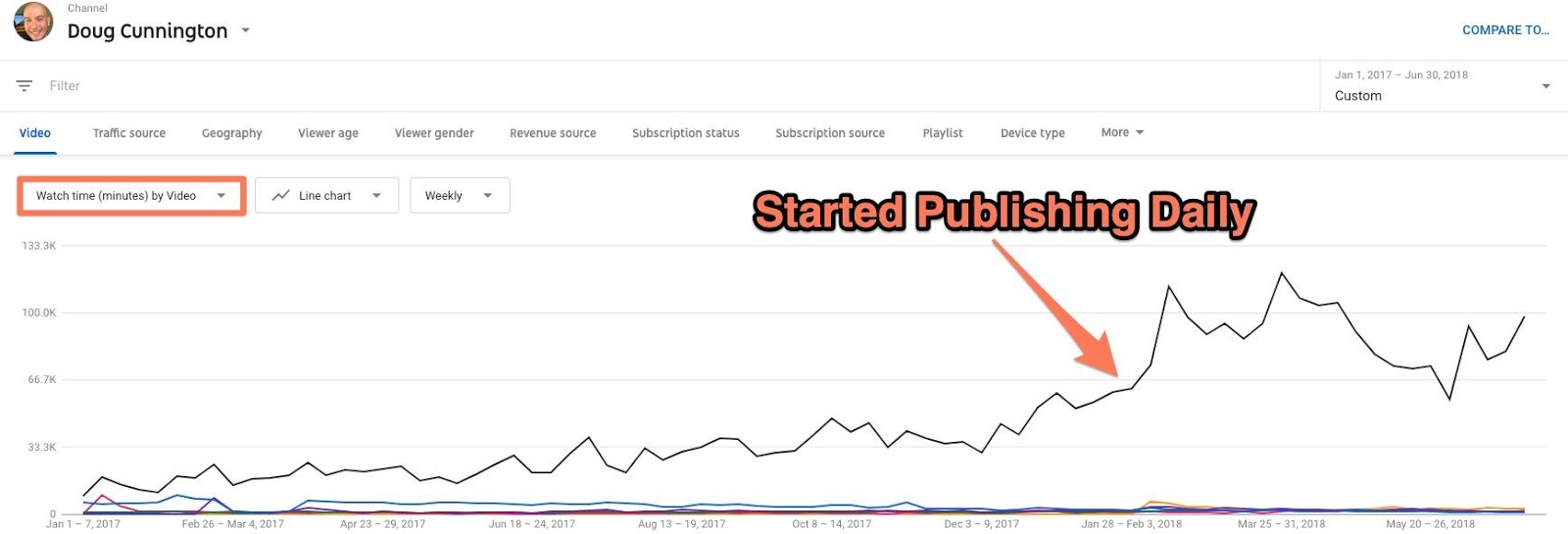
Why Do It?
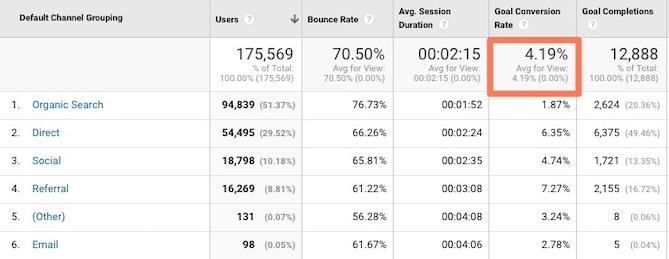
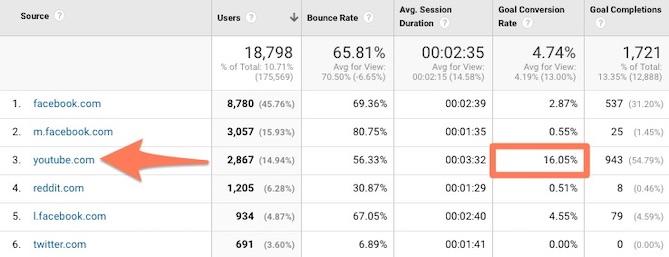
A Project Direction Approach
1. Define the Project
2. Review with Peers
three. Outline and Develop the Procedure
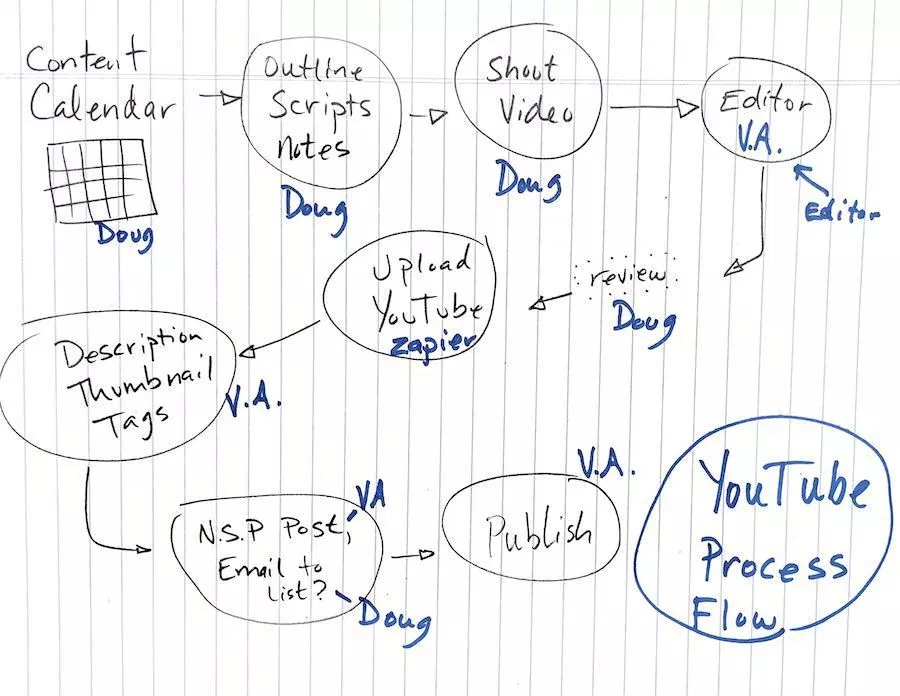
iv. Tracking and Managing the Project Condition
v. Building the Team
Nigh Hiring Freelancers
Workflow and Standard Operating Procedures (SOP)
Executing on the Process
Refining the Process
Lessons Learned
What Didn't Work
What Worked
Takeaways


Originally published Jun 17, 2019 vii:00:00 AM, updated June 17 2019
Source: https://blog.hubspot.com/marketing/published-60-youtube-videos-in-30-days
0 Response to "Will Youtube Only Let You Upload So Many Videos on One Day"
Post a Comment