What Happens to the Amino Acids That Are Absorbed After the Digestive Process Is Complete?
Learning Objectives
Past the end of this section, you volition be able to:
- Identify the locations and primary secretions involved in the chemic digestion of carbohydrates, proteins, lipids, and nucleic acids
- Compare and contrast absorption of the hydrophilic and hydrophobic nutrients
As you have learned, the process of mechanical digestion is relatively simple. It involves the physical breakdown of food but does not alter its chemical makeup. Chemic digestion, on the other hand, is a complex process that reduces nutrient into its chemical building blocks, which are so captivated to nourish the cells of the body. In this section, you will look more closely at the processes of chemic digestion and absorption.

Figure one. Digestion begins in the rima oris and continues equally food travels through the small intestine. Most assimilation occurs in the small intestine.
Chemical Digestion
Large food molecules (for example, proteins, lipids, nucleic acids, and starches) must be cleaved down into subunits that are small enough to be absorbed by the lining of the gastrointestinal tract. This is accomplished by enzymes through hydrolysis. The many enzymes involved in chemical digestion are summarized in Table 1.
| Table 1. The Digestive Enzymes | ||||
|---|---|---|---|---|
| Enzyme Category | Enzyme Name | Source | Substrate | Product |
| Salivary Enzymes | Lingual lipase | Lingual glands | Triglycerides | Free fatty acids, and mono- and diglycerides |
| Salivary Enzymes | Salivary amylase | Salivary glands | Polysaccharides | Disaccharides and trisaccharides |
| Gastric enzymes | Gastric lipase | Principal cells | Triglycerides | Fatty acids and monoacylglycerides |
| Gastric enzymes | Pepsin* | Primary cells | Proteins | Peptides |
| Brush border enzymes | α-Dextrinase | Small intestine | α-Dextrins | Glucose |
| Brush edge enzymes | Enteropeptidase | Small intestine | Trypsinogen | Trypsin |
| Brush border enzymes | Lactase | Pocket-size intestine | Lactose | Glucose and galactose |
| Castor edge enzymes | Maltase | Small-scale intestine | Maltose | Glucose |
| Castor border enzymes | Nucleosidases and phosphatases | Small intestine | Nucleotides | Phosphates, nitrogenous bases, and pentoses |
| Brush edge enzymes | Peptidases | Small intestine |
|
|
| Castor border enzymes | Sucrase | Small intestine | Sucrose | Glucose and fructose |
| Pancreatic enzymes | Carboxy-peptidase* | Pancreatic acinar cells | Amino acids at the carboxyl end of peptides | Amino acids and peptides |
| Pancreatic enzymes | Chymotrypsin* | Pancreatic acinar cells | Proteins | Peptides |
| Pancreatic enzymes | Elastase* | Pancreatic acinar cells | Proteins | Peptides |
| Pancreatic enzymes | Nucleases | Pancreatic acinar cells |
| Nucleotides |
| Pancreatic enzymes | Pancreatic amylase | Pancreatic acinar cells | Polysaccharides (starches) | α-Dextrins, disaccharides (maltose), trisaccharides (maltotriose) |
| Pancreatic enzymes | Pancreatic lipase | Pancreatic acinar cells | Triglycerides that have been emulsified past bile salts | Fatty acids and monoacylglycerides |
| Pancreatic enzymes | Trypsin* | Pancreatic acinar cells | Proteins | Peptides |
| *These enzymes have been activated by other substances. | ||||
Carbohydrate Digestion
The average American diet is about 50 percent carbohydrates, which may be classified according to the number of monomers they contain of simple sugars (monosaccharides and disaccharides) and/or complex sugars (polysaccharides). Glucose, galactose, and fructose are the 3 monosaccharides that are commonly consumed and are readily captivated. Your digestive system is as well able to intermission downwards the disaccharide sucrose (regular tabular array sugar: glucose + fructose), lactose (milk sugar: glucose + galactose), and maltose (grain saccharide: glucose + glucose), and the polysaccharides glycogen and starch (chains of monosaccharides). Your bodies do not produce enzymes that tin intermission down nearly fibrous polysaccharides, such as cellulose. While indigestible polysaccharides do not provide any nutritional value, they do provide dietary fiber, which helps propel food through the gastrointestinal tract.
The chemical digestion of starches begins in the rima oris and has been reviewed above.
In the minor intestine, pancreatic amylase does the 'heavy lifting' for starch and carbohydrate digestion (Figure 2). Afterward amylases break downwardly starch into smaller fragments, the brush border enzyme α-dextrinase starts working on α-dextrin, breaking off ane glucose unit at a fourth dimension. 3 brush border enzymes hydrolyze sucrose, lactose, and maltose into monosaccharides. Sucrase splits sucrose into one molecule of fructose and one molecule of glucose; maltase breaks downward maltose and maltotriose into ii and three glucose molecules, respectively; and lactase breaks down lactose into ane molecule of glucose and one molecule of galactose. Insufficient lactase can pb to lactose intolerance.

Figure two. Carbohydrates are broken downwardly into their monomers in a series of steps.
Protein Digestion
Proteins are polymers equanimous of amino acids linked past peptide bonds to course long chains. Digestion reduces them to their constituent amino acids. You usually swallow about 15 to xx pct of your total calorie intake as protein.
The digestion of protein starts in the stomach, where HCl and pepsin pause proteins into smaller polypeptides, which then travel to the pocket-size intestine. Chemical digestion in the small-scale intestine is connected by pancreatic enzymes, including chymotrypsin and trypsin, each of which deed on specific bonds in amino acid sequences. At the aforementioned time, the cells of the brush edge secrete enzymes such as aminopeptidase and dipeptidase, which farther break down peptide bondage. This results in molecules small plenty to enter the bloodstream.
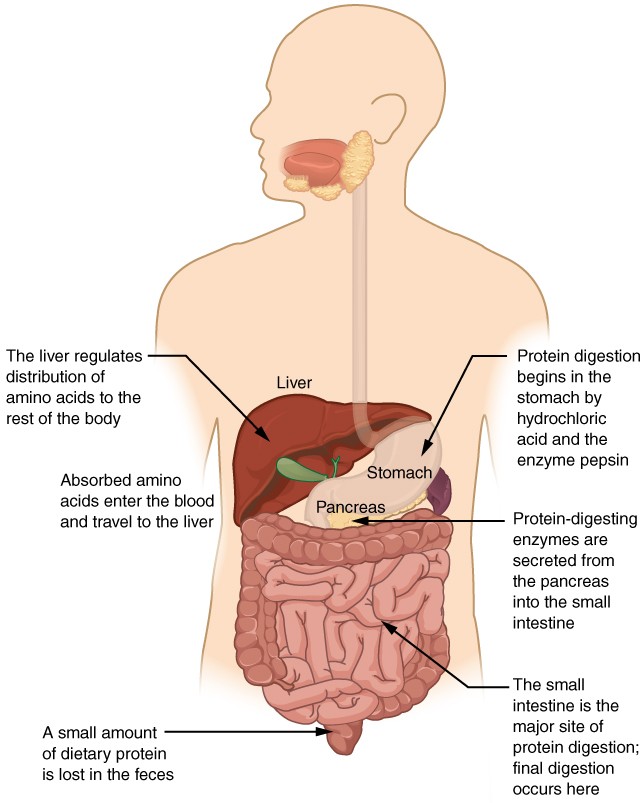
Figure three. The digestion of poly peptide begins in the breadbasket and is completed in the modest intestine.

Effigy 4. Proteins are successively broken down into their amino acrid components.
Lipid Digestion
A healthy nutrition limits lipid intake to 35 pct of total calorie intake. The most common dietary lipids are triglycerides, which are made up of a glycerol molecule jump to three fatty acrid chains. Small amounts of dietary cholesterol and phospholipids are likewise consumed.
The three lipases responsible for lipid digestion are lingual lipase, gastric lipase, and pancreatic lipase. However, considering the pancreas is the only consequential source of lipase, virtually all lipid digestion occurs in the small intestine. Pancreatic lipase breaks downwards each triglyceride into two free fatty acids and a monoglyceride. The fatty acids include both short-concatenation (less than 10 to 12 carbons) and long-chain fat acids.
Nucleic Acrid Digestion
The nucleic acids Dna and RNA are found in most of the foods you eat. 2 types of pancreatic nuclease are responsible for their digestion: deoxyribonuclease, which digests DNA, and ribonuclease, which digests RNA. The nucleotides produced by this digestion are further broken down past two intestinal brush edge enzymes (nucleosidase and phosphatase) into pentoses, phosphates, and nitrogenous bases, which can be absorbed through the alimentary canal wall. The big food molecules that must exist cleaved downward into subunits are summarized in Tabular array 2.
| Tabular array 2. Absorbable Food Substances | |
|---|---|
| Source | Substance |
| Carbohydrates | Monosaccharides: glucose, galactose, and fructose |
| Proteins | Single amino acids, dipeptides, and tripeptides |
| Triglycerides | Monoacylglycerides, glycerol, and free fatty acids |
| Nucleic acids | Pentose sugars, phosphates, and nitrogenous bases |
Assimilation
The mechanical and digestive processes accept ane goal: to catechumen nutrient into molecules small enough to be absorbed by the epithelial cells of the intestinal villi. The absorptive chapters of the alimentary canal is most countless. Each day, the alimentary culvert processes upward to 10 liters of food, liquids, and GI secretions, still less than 1 liter enters the large intestine. Near all ingested nutrient, fourscore percentage of electrolytes, and 90 percent of water are captivated in the small-scale intestine. Although the unabridged minor intestine is involved in the assimilation of h2o and lipids, most assimilation of carbohydrates and proteins occurs in the jejunum. Notably, bile salts and vitamin B12 are absorbed in the concluding ileum. By the time chyme passes from the ileum into the large intestine, it is essentially indigestible food residue (mainly plant fibers similar cellulose), some water, and millions of leaner.
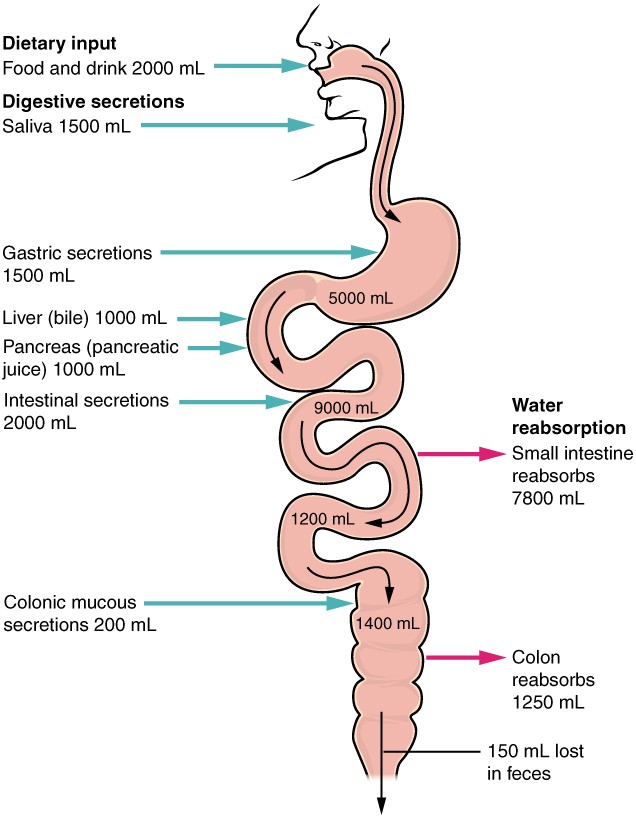
Figure v. Absorption is a circuitous process, in which nutrients from digested food are harvested.
Absorption can occur through five mechanisms: (1) active transport, (2) passive diffusion, (3) facilitated diffusion, (4) co-transport (or secondary active transport), and (five) endocytosis. As you will recall from Chapter 3, active transport refers to the movement of a substance across a cell membrane going from an area of lower concentration to an area of higher concentration (up the concentration gradient). In this type of transport, proteins within the cell membrane deed as "pumps," using cellular energy (ATP) to motion the substance. Passive improvidence refers to the motility of substances from an area of college concentration to an expanse of lower concentration, while facilitated diffusion refers to the movement of substances from an area of higher to an area of lower concentration using a carrier poly peptide in the cell membrane. Co-send uses the movement of 1 molecule through the membrane from higher to lower concentration to ability the movement of another from lower to higher. Finally, endocytosis is a transportation procedure in which the cell membrane engulfs material. It requires energy, generally in the form of ATP.
Because the cell's plasma membrane is made upwards of hydrophobic phospholipids, water-soluble nutrients must apply transport molecules embedded in the membrane to enter cells. Moreover, substances cannot pass betwixt the epithelial cells of the intestinal mucosa because these cells are spring together by tight junctions. Thus, substances can but enter blood capillaries by passing through the apical surfaces of epithelial cells and into the interstitial fluid. H2o-soluble nutrients enter the capillary blood in the villi and travel to the liver via the hepatic portal vein.
In dissimilarity to the water-soluble nutrients, lipid-soluble nutrients tin can lengthened through the plasma membrane. Once inside the cell, they are packaged for transport via the base of the cell and then enter the lacteals of the villi to exist transported by lymphatic vessels to the systemic circulation via the thoracic duct. The absorption of almost nutrients through the mucosa of the intestinal villi requires active send fueled by ATP. The routes of absorption for each nutrient category are summarized in Tabular array 3.
| Table 3. Absorption in the Alimentary canal | ||||
|---|---|---|---|---|
| Food | Breakdown products | Absorption machinery | Entry to bloodstream | Destination |
| Carbohydrates | Glucose | Co-transport with sodium ions | Capillary blood in villi | Liver via hepatic portal vein |
| Carbohydrates | Galactose | Co-ship with sodium ions | Capillary blood in villi | Liver via hepatic portal vein |
| Carbohydrates | Fructose | Facilitated diffusion | Capillary blood in villi | Liver via hepatic portal vein |
| Poly peptide | Amino acids | Co-transport with sodium ions | Capillary blood in villi | Liver via hepatic portal vein |
| Lipids | Long-chain fatty acids | Diffusion into intestinal cells, where they are combined with proteins to create chylomicrons | Lacteals of villi | Systemic circulation via lymph entering thoracic duct |
| Lipids | Monoacylglycerides | Diffusion into intestinal cells, where they are combined with proteins to create chylomicrons | Lacteals of villi | Systemic circulation via lymph entering thoracic duct |
| Lipids | Brusque-chain fatty acids | Simple improvidence | Capillary claret in villi | Liver via hepatic portal vein |
| Lipids | Glycerol | Simple diffusion | Capillary claret in villi | Liver via hepatic portal vein |
| Lipids | Nucleic acrid digestion products | Active transport via membrane carriers | Capillary blood in villi | Liver via hepatic portal vein |
Saccharide Absorption
All carbohydrates are absorbed in the grade of monosaccharides. The small intestine is highly efficient at this, absorbing monosaccharides at an estimated rate of 120 grams per hour. All normally digested dietary carbohydrates are absorbed; indigestible fibers are eliminated in the feces. The monosaccharides glucose and galactose are transported into the epithelial cells by common poly peptide carriers via secondary active transport (that is, co-ship with sodium ions). The monosaccharides leave these cells via facilitated diffusion and enter the capillaries through intercellular clefts. The monosaccharide fructose (which is in fruit) is absorbed and transported by facilitated diffusion alone. The monosaccharides combine with the transport proteins immediately after the disaccharides are broken downwardly.
Protein Assimilation
Active send mechanisms, primarily in the duodenum and jejunum, absorb nearly proteins equally their breakdown products, amino acids. Almost all (95 to 98 pct) protein is digested and absorbed in the small intestine. The blazon of carrier that transports an amino acid varies. Almost carriers are linked to the agile ship of sodium. Short chains of two amino acids (dipeptides) or three amino acids (tripeptides) are as well transported actively. However, after they enter the absorbent epithelial cells, they are broken down into their amino acids before leaving the prison cell and entering the capillary blood via improvidence.
Lipid Absorption
Nearly 95 percent of lipids are absorbed in the small intestine. Bile salts not but speed up lipid digestion, they are also essential to the assimilation of the end products of lipid digestion. Short-chain fatty acids are relatively water soluble and tin enter the absorptive cells (enterocytes) directly. Despite being hydrophobic, the minor size of short-chain fatty acids enables them to be absorbed by enterocytes via uncomplicated diffusion, and so accept the aforementioned path as monosaccharides and amino acids into the claret capillary of a villus.
The large and hydrophobic long-chain fatty acids and monoacylglycerides are not so easily suspended in the watery intestinal chyme. However, bile salts and lecithin resolve this result by enclosing them in a micelle, which is a tiny sphere with polar (hydrophilic) ends facing the watery surroundings and hydrophobic tails turned to the interior, creating a receptive surroundings for the long-concatenation fatty acids. The cadre also includes cholesterol and fatty-soluble vitamins. Without micelles, lipids would sit on the surface of chyme and never come in contact with the absorptive surfaces of the epithelial cells. Micelles tin easily squeeze between microvilli and get very nigh the luminal cell surface. At this signal, lipid substances exit the micelle and are captivated via simple improvidence.
The free fatty acids and monoacylglycerides that enter the epithelial cells are reincorporated into triglycerides. The triglycerides are mixed with phospholipids and cholesterol, and surrounded with a protein coat. This new circuitous, called a chylomicron, is a h2o-soluble lipoprotein. After being candy by the Golgi apparatus, chylomicrons are released from the jail cell. Too large to pass through the basement membranes of blood capillaries, chylomicrons instead enter the big pores of lacteals. The lacteals come together to form the lymphatic vessels. The chylomicrons are transported in the lymphatic vessels and empty through the thoracic duct into the subclavian vein of the circulatory arrangement. Once in the bloodstream, the enzyme lipoprotein lipase breaks downwardly the triglycerides of the chylomicrons into free fatty acids and glycerol. These breakdown products then pass through capillary walls to be used for energy by cells or stored in adipose tissue every bit fat. Liver cells combine the remaining chylomicron remnants with proteins, forming lipoproteins that transport cholesterol in the blood.

Effigy 6. Unlike amino acids and unproblematic sugars, lipids are transformed as they are absorbed through epithelial cells.
Nucleic Acid Assimilation
The products of nucleic acrid digestion—pentose sugars, nitrogenous bases, and phosphate ions—are transported past carriers across the villus epithelium via active transport. These products so enter the bloodstream.
Mineral Absorption
The electrolytes captivated by the pocket-sized intestine are from both GI secretions and ingested foods. Since electrolytes dissociate into ions in h2o, most are absorbed via active send throughout the entire minor intestine. During absorption, co-send mechanisms result in the accumulation of sodium ions inside the cells, whereas anti-port mechanisms reduce the potassium ion concentration inside the cells. To restore the sodium-potassium gradient across the cell membrane, a sodium-potassium pump requiring ATP pumps sodium out and potassium in.
In general, all minerals that enter the intestine are captivated, whether you need them or not. Iron and calcium are exceptions; they are absorbed in the duodenum in amounts that run into the trunk'southward current requirements, as follows:
Fe—The ionic fe needed for the production of hemoglobin is absorbed into mucosal cells via active send. Once inside mucosal cells, ionic iron binds to the protein ferritin, creating iron-ferritin complexes that store fe until needed. When the body has enough iron, nigh of the stored iron is lost when worn-out epithelial cells slough off. When the body needs iron because, for example, it is lost during acute or chronic bleeding, there is increased uptake of iron from the intestine and accelerated release of atomic number 26 into the bloodstream. Since women experience meaning fe loss during flow, they have effectually four times as many iron transport proteins in their abdominal epithelial cells as exercise men.
Calcium—Blood levels of ionic calcium determine the absorption of dietary calcium. When blood levels of ionic calcium drop, parathyroid hormone (PTH) secreted past the parathyroid glands stimulates the release of calcium ions from bone matrices and increases the reabsorption of calcium by the kidneys. PTH also upregulates the activation of vitamin D in the kidney, which then facilitates intestinal calcium ion absorption.
Vitamin Absorption
The small intestine absorbs the vitamins that occur naturally in food and supplements. Fat-soluble vitamins (A, D, Eastward, and K) are captivated along with dietary lipids in micelles via elementary diffusion. This is why y'all are advised to eat some fatty foods when you accept fatty-soluble vitamin supplements. Almost water-soluble vitamins (including most B vitamins and vitamin C) likewise are captivated by simple diffusion. An exception is vitamin B12, which is a very large molecule. Intrinsic cistron secreted in the stomach binds to vitamin B12, preventing its digestion and creating a complex that binds to mucosal receptors in the terminal ileum, where it is taken upwards by endocytosis.
Water Absorption
Each day, virtually nine liters of fluid enter the small-scale intestine. About two.three liters are ingested in foods and beverages, and the rest is from GI secretions. About xc percent of this water is absorbed in the small intestine. Water absorption is driven by the concentration gradient of the water: The concentration of water is higher in chyme than it is in epithelial cells. Thus, h2o moves down its concentration gradient from the chyme into cells. As noted earlier, much of the remaining water is then absorbed in the colon.
Chapter Review
The small intestine is the site of nigh chemical digestion and nearly all absorption. Chemical digestion breaks large food molecules down into their chemical building blocks, which tin and then exist captivated through the intestinal wall and into the general circulation. Intestinal castor edge enzymes and pancreatic enzymes are responsible for the majority of chemical digestion. The breakdown of fat also requires bile.
Nearly nutrients are absorbed by ship mechanisms at the apical surface of enterocytes. Exceptions include lipids, fat-soluble vitamins, and near water-soluble vitamins. With the help of bile salts and lecithin, the dietary fats are emulsified to class micelles, which can bear the fat particles to the surface of the enterocytes. There, the micelles release their fats to diffuse beyond the cell membrane. The fats are then reassembled into triglycerides and mixed with other lipids and proteins into chylomicrons that can pass into lacteals. Other captivated monomers travel from blood capillaries in the villus to the hepatic portal vein and and then to the liver.
Self Check
Reply the question(s) below to see how well you empathize the topics covered in the previous department.
Critical Thinking Questions
- Explain the role of bile salts and lecithin in the emulsification of lipids (fats).
- How is vitamin B12 captivated?
Glossary
α-dextrin: breakup product of starch
α-dextrinase: brush edge enzyme that acts on α-dextrins
aminopeptidase: brush border enzyme that acts on proteins
chylomicron: large lipid-transport compound made up of triglycerides, phospholipids, cholesterol, and proteins
deoxyribonuclease: pancreatic enzyme that digests DNA
dipeptidase: castor border enzyme that acts on proteins
lactase: castor border enzyme that breaks downward lactose into glucose and galactose
lipoprotein lipase: enzyme that breaks down triglycerides in chylomicrons into fatty acids and monoglycerides
maltase: brush border enzyme that breaks down maltose and maltotriose into two and three molecules of glucose, respectively
micelle: tiny lipid-ship compound composed of bile salts and phospholipids with a fat acrid and monoacylglyceride core
nucleosidase: brush border enzyme that digests nucleotides
pancreatic amylase: enzyme secreted by the pancreas that completes the chemical digestion of carbohydrates in the pocket-sized intestine
pancreatic lipase: enzyme secreted by the pancreas that participates in lipid digestion
pancreatic nuclease: enzyme secreted by the pancreas that participates in nucleic acrid digestion
phosphatase: brush edge enzyme that digests nucleotides
ribonuclease: pancreatic enzyme that digests RNA
sucrase: brush edge enzyme that breaks down sucrose into glucose and fructose
Source: https://courses.lumenlearning.com/suny-ap2/chapter/chemical-digestion-and-absorption-a-closer-look/
0 Response to "What Happens to the Amino Acids That Are Absorbed After the Digestive Process Is Complete?"
Post a Comment